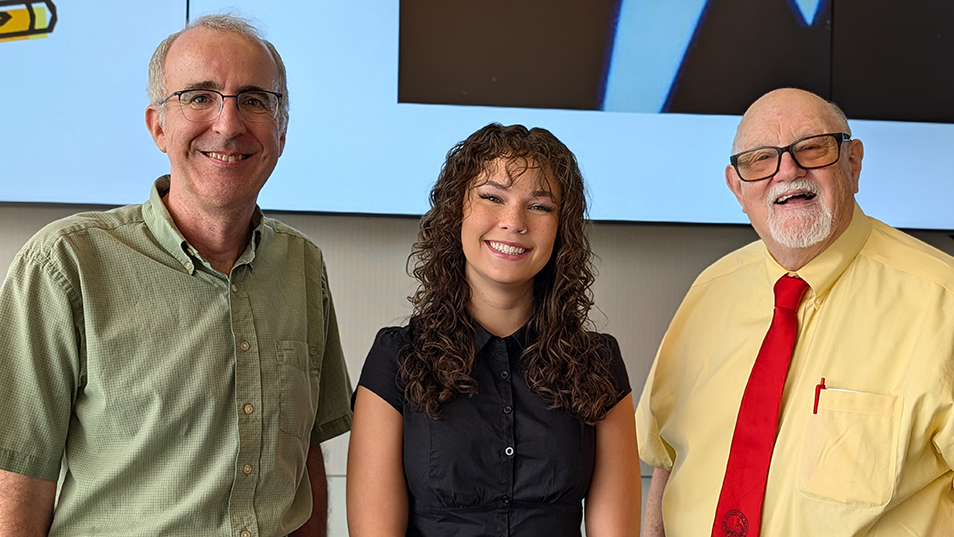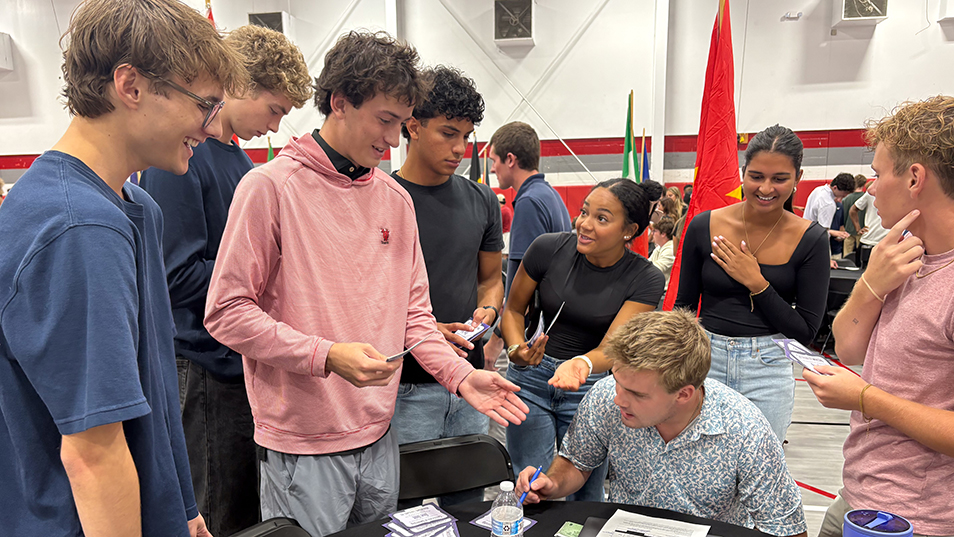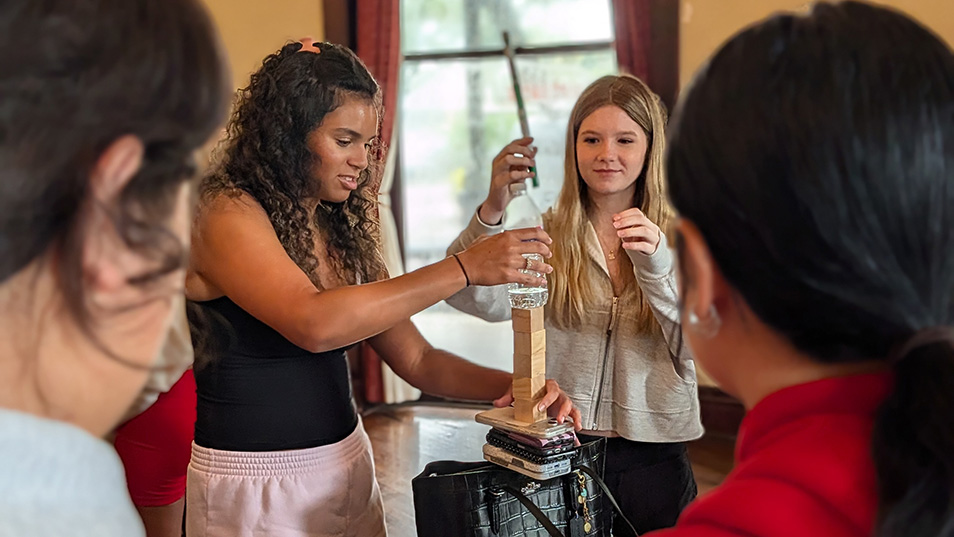
UTampa students took part in a recent Resilience Reset workshop on campus. Photo by Katelyn Ferral
Resilience Resets and Bouncing Back
Share

UTampa students took part in a recent Resilience Reset workshop on campus. Photo by Katelyn Ferral
It’s tempting to think that making mistakes equals failure.
For college students and others, it can be easy to let such misleading thoughts take over, and catching them, correcting them and growing from them can be harder. It takes practice, but often the payoff is worth it. That practice builds resilience, the ability to recover, adapt, and bounce back when things don’t go as planned.
The University of Tampa offers workshops year-round on how to build resilience, showing students the tools to do it through interactive exercises. Resilience Reset: Navigating the Messy Middle is a 90-minute emotional well-being workshop hosted by UTampa Wellness Services that aims to teach students specific skills for how to manage anxiety, stress and loneliness. The program is free and open to all students and members of the campus community.
Last month, Tiffany Nelson, associate director of wellness for the University, began a Resilience Reset for first-year students by clarifying what resilience was not.
“Resilience isn’t toxic positivity,” she said. “Resilience isn’t where some people think if they push through, they can get through anything.”
Instead, when challenges arise, resilience is “working with the people around you and using your own resources to figure out what we can do next,” Nelson said.
“Today, we're going to talk about putting it into practice,” she said.
Nelson outlined several scenarios that students could face, including a professor requesting a meeting or getting a lower grade than expected on a test.
We all have things that happen that in front of our brains, start to spiral immediately, Nelson said.
UTampa outlines five pillars for resilience reset to help prevent the spiral: recognize, exhale, shift, experiment and take care. Students are encouraged to recognize what’s happening, breathe, and calm their minds.
One specific breathing technique, the 4-7-8, focuses on slowing the breath and exhaling longer than inhaling. Another, called “reframing,” encourages students not to gloss over unpleasant realities or situations, but to alter the questions they ask themselves afterward.
Say a student fails a test. They might be tempted to think they’re bad and a failure. Here’s how Nelson said to think through it, reframing the situation with a growth mindset:
“(It’s) asking yourself, what can I do differently before the next exam? It's giving yourself power. It's giving yourself an actual action to take rather than being critical of yourself.”
It’s crucial to leave room for mistakes and imperfections, especially when embarking on a new chapter in life or trying something new, Nelson said.
“When we're trying really hard to get it all right, right away, and be perfect, it puts a lot of unnecessary pressure on us,” Nelson said. “Remember, you have to break some eggs in order to make an omelet.”
Though the resilience workshops center around the same set of strategies and tools, they are tailored to the audience and can emphasize different aspects of each resilience approach to make it most relevant to the group participating, Nelson said.
“There are a million things we could cover. We can’t cover them all, so we try to choose the ones that are hopefully the most likely they can take and use.”
Divya Parray ’27, a senior psychology major from Trinidad and Tobago, knows firsthand how stressful navigating college can be. As an international student at UTampa, she has juggled her studies, student visa logistics and future career plans.
“Resilience is probably, like, the theme of college,” Parray said. “I feel like you need to learn how to be resilient, learn how to bounce back, learn how to just be able to cope with life challenges and handle it in a healthy way because university throws so much new stuff at you.”
Parray has used the resilience strategies earlier in her UTampa career and now helps other students as a peer wellness coach. She helps facilitate Resilience Reset workshops and meets with students one-on-one to talk about how to build resilience and work through mental health challenges.
“I feel like becoming a peer wellness coach helped with that a lot because I did not want to practice one thing and do another,” she said.
Even after years of building resilience throughout college, challenges still come. Parray said this year has so far been her most challenging as she applied for jobs after graduation and also figured out how to stay in the U.S. for work. She found a full-time job as a registered behavioral technician working with children with autism, but securing the proper documents continues to be arduous.
“Almost every day, I've been having to submit forms, apply for things,” she said of her immigration paperwork.
“I've had so many moments where I was, like, ‘Is this even worth it? Should I keep trying?’” she said. “I've just had to get through it and be able to stay sane.”
Leveraging resilience techniques that she teaches, working with a therapist and continuing to use UTampa’s wellness resources has helped, she said.
“I've been able to handle it a lot better just by not isolating and getting help when I need help,” Parray said.
She has also learned to recognize that when things don’t work out, there are other, often better paths.
“That is such a key life lesson,” she said.