In a crowded social media feed where influencers, brands and viral posts compete for attention, how likely is it that a video about environmental sustainability would get through to college-aged users?
Lina Gomez-Vasquez, associate professor of communication, studies social media marketing and corporate social responsibility and recently completed research looking at how effective corporate sustainability messages are in reaching Gen Z. The idea was prompted when she noticed that most corporations target older audiences with sustainability messages instead of younger generations, who felt left out.
“Sustainability messages appear all over social media, yet companies often create a single version of the message and hope it will have the same effect on everyone,” said Gomez-Vasquez.
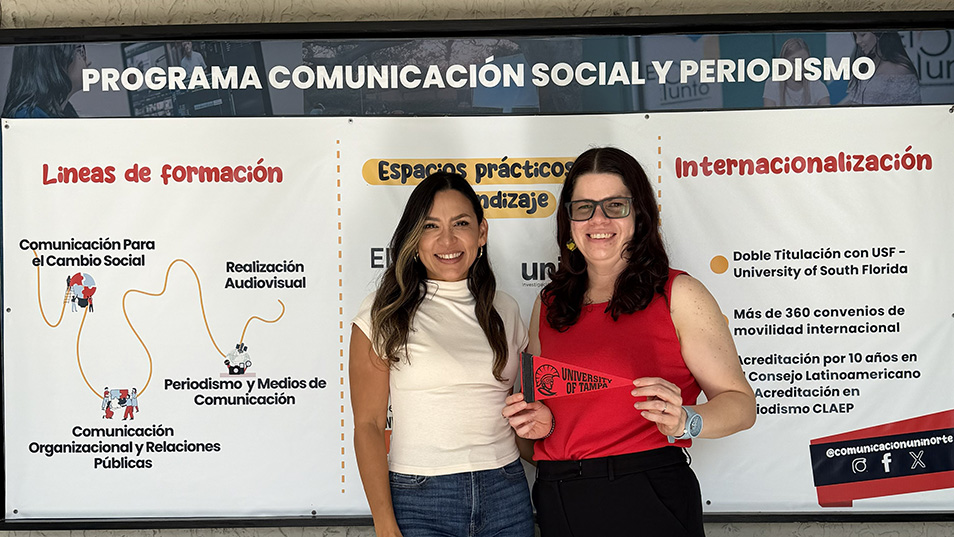
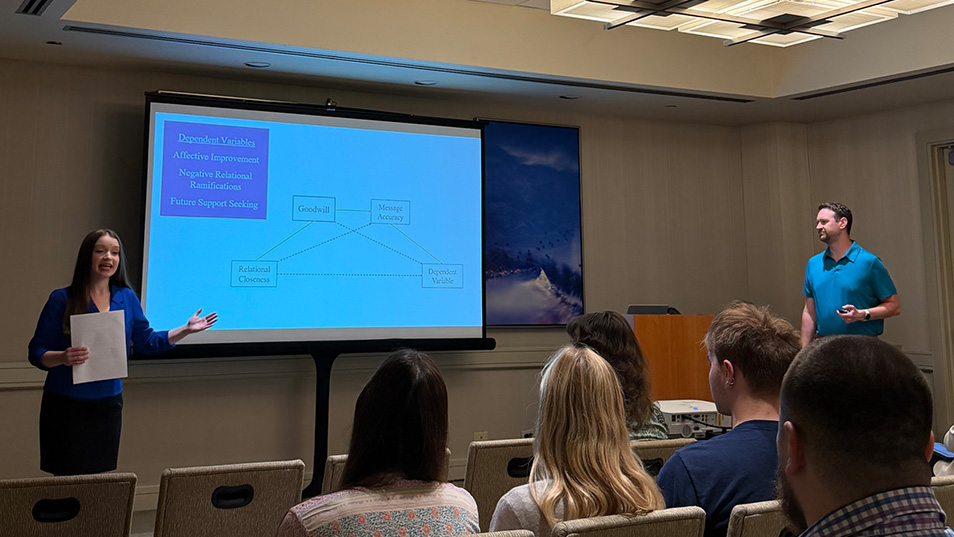
Gomez-Vasquez worked with colleagues at Universidad Nacional de Colombia, Universidad del Norte in Colombia and RheinMain University of Applied Sciences in Germany to recruit and survey participants from across the three countries. In February, she collected data from 14 students at the University of Tampa and in April traveled to Colombia to interview 14 students there. She went to Germany in May to get perspectives from 13 students.
After the students answered questions about their personal thoughts on environmental sustainability, they watched three Instagram reels, each one created by a popular sustainability influencer in the U.S., Colombia and Germany. Eye-tracking software was used to record precisely what the students were drawn to in the videos, and facial expression software recorded their emotional reactions as they watched. After each video, the students completed a survey describing what they had noticed, understood and felt during the video.
In addition to already having contacts in Colombia and Germany, Gomez-Vasquez wanted to include students from two other countries from different parts of the world to understand the variety of college students’ perspectives globally.
“The way a message on sustainability is interpreted depends on both the place where it comes from and the place where the reader is from,” she said.
In the follow-up interviews, Gomez-Vasquez noted that the majority of students from all three countries agreed on the main focus of each country’s reels. They identified a strong theme of regional inequality in the Colombian reel, a theme of environmental policy in the German reel, and a consumer culture theme in the American video.
The themes didn’t affect students’ engagement with the videos — instead, the way information was shared mattered most. Reels that told stories about the people affected by climate crises attracted more attention than those that plainly stated facts and figures. Video engagement was even higher when they ended with a hopeful solution rather than merely identifying a problem. Additionally, the Colombian video opened with people dancing to lively music, which was memorable, but scored the lowest in terms of clearly communicating its aim.
Gomez-Vasquez and her team also realized that emotional reactions detected by the software did not necessarily equal trust. The American reel scored the highest in eliciting an emotional response and had the highest self-assessed level of motivating real action. Though the German video scored lower in those areas, it was found to be the most credible by the students.
The eye-tracking and facial expression software also indicated a trend Gomez-Vasquez called a “familiarity effect.” When the students viewed the video from their own country, they weren’t as actively engaged as when they watched the content from the other two countries.
“Content from your own culture is processed in the way one would expect and without arousing any special notice,” she said. “Content from other cultures provokes a more intense and more obvious reaction, whether positive or negative.”
Gomez-Vasquez clarified that this was more of a qualitative, exploratory study searching for consistent patterns rather than a statistical conclusion that can be applied to all of Gen Z. Still, she hopes the brands that are crafting these messages can look to this research to better understand and reach younger audiences.